Kingroon
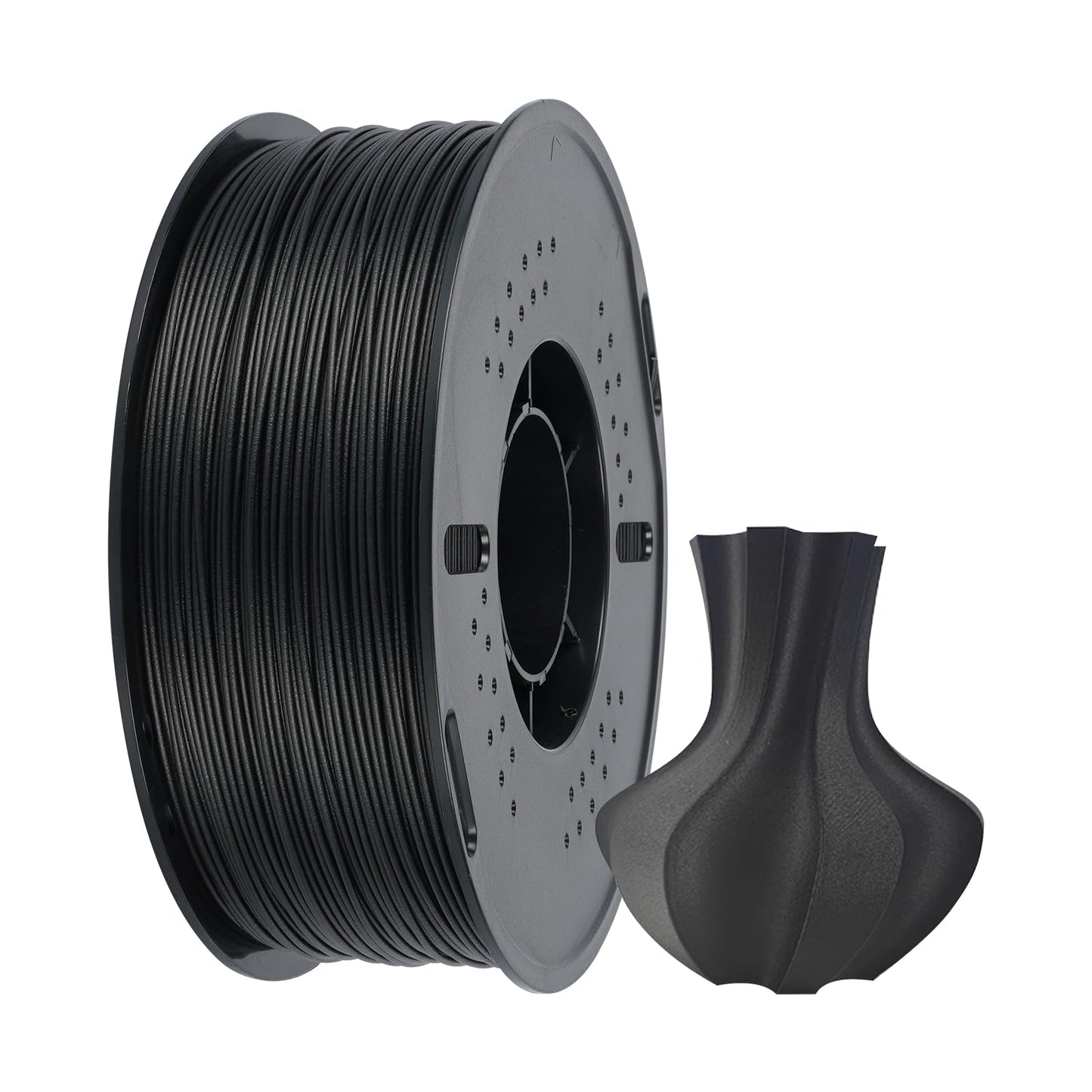
Kingroon Carbon Fiber ABS Filament 1.75mm, High Strength & Heat Resistant for Functional Prototypes, Mechanical Parts - 1kg Spoo
Kingroon Carbon Fiber ABS Filament 1.75mm, High Strength & Heat Resistant for Functional Prototypes, Mechanical Parts - 1kg Spoo
?Carbon Fiber Reinforced Strength? Carbon fiber reinforced ABS filament 1.75 mm; Uses chopped carbon fiber to enhance strength and rigidity; Printing temperature 240 to 270 degrees Celsius; Heated bed temperature 100 to 110 degrees Celsius; Improves layer adhesion and dimensional accuracy; Carbon fiber filling reduces warping; Enhances impact resistance and heat tolerance; Suitable for high-performance functional prototypes and mechanical parts ?Engineered for Demanding Applications? Professional grade carbon fiber ABS filament; Heat deflection temperature exceeding 100 degrees Celsius; Excellent dimensional stability; Low warping characteristics; Accurate reproduction of complex geometries; Hardened steel nozzle required; 1.75 mm diameter with 0.03 mm tolerance; Provides stable and consistent extrusion flow ?Trusted by Professional Users? Material selected by engineers and manufacturers; Suitable for rapid prototyping and custom tooling; Applications in RC vehicles and aerospace modeling; Superior rigidity supports durable lightweight components; 1.75 mm black filament; Significantly reduces warping deformation; Compatible with most professional industrial 3D printers ?Industrial Grade Applications? From functional prototypes to end-use parts; Performs in real working conditions; Manufacturing of jigs and mechanical assemblies; High-stress components for industrial R&D environments; Thermal stability and interlayer strength; Print speed 40 to 100 mm per second; Low shrinkage characteristics ensure consistent results ?Product Quality Assurance? Each spool undergoes strict quality control; Recommended for use in well-ventilated areas; Technical support for printing parameters; Vacuum moisture-proof packaging maintains material performance; Ensures stable performance from first to final print
Share